
What, Me Worry?
New comics, old satire, and 600 issues of refusing to take anything seriously—by Stephen Schleicher
Another Wednesday is here, which means new comics are hitting shelves and old institutions are stubbornly refusing to die.
We’ve got the return of a classic character, a weird Abraham Lincoln robot comic, and a milestone issue from a magazine that has somehow survived changing tastes, collapsing newsstands, the death of print, and multiple generations of people insisting it was finished.
In other words: a pretty normal week.
IF YOU READ ONLY ONE COMIC THIS WEEK
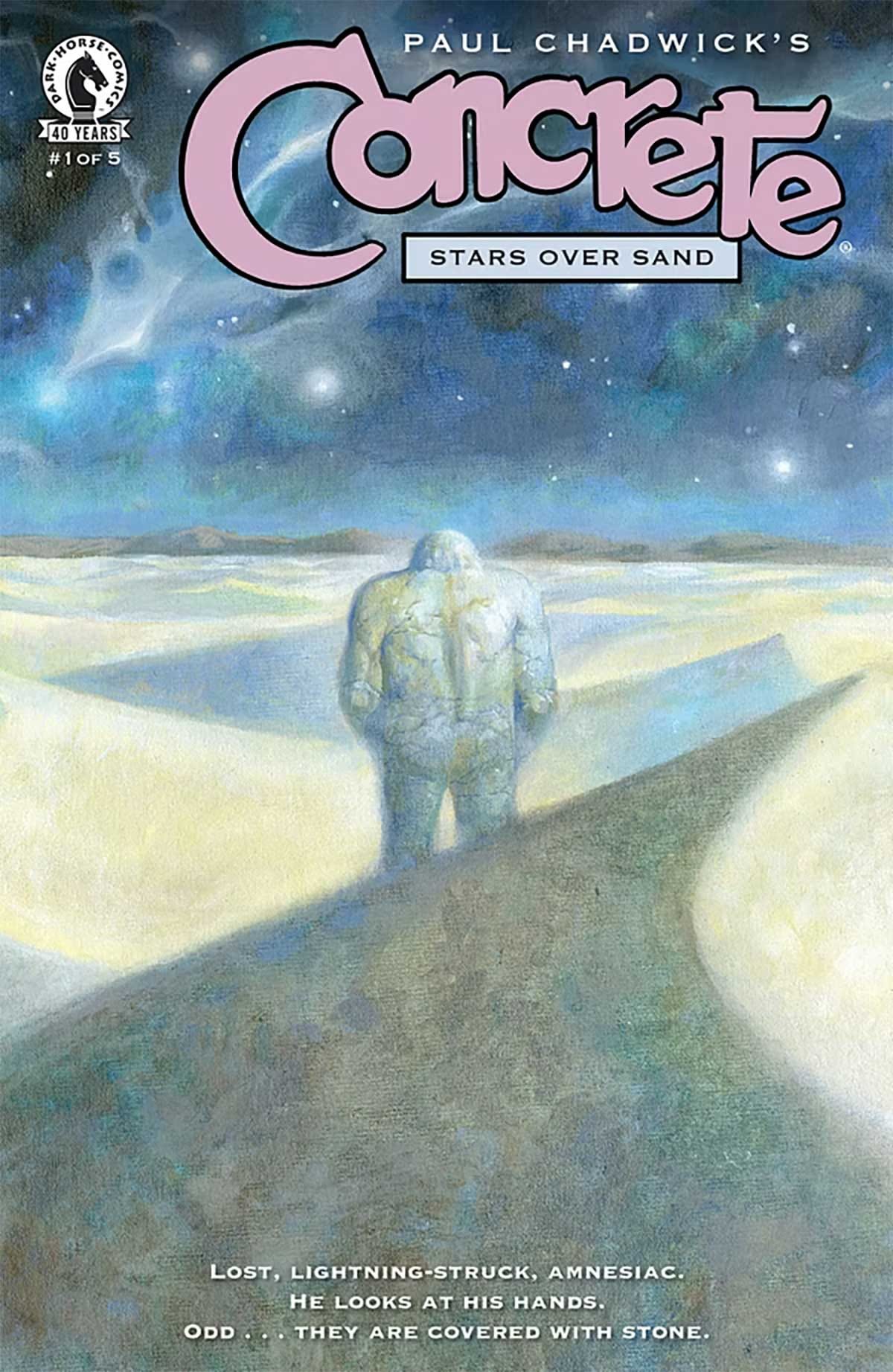
CONCRETE: STARS OVER SAND #1
Writer: Paul Chadwick
Artist: Paul Chadwick
Publisher: Dark Horse Comics
Cover Price: $4.99
Old school comic fans will remember Concrete as that one weird title from Dark Horse Comics that made the company stand out back in the day. Concrete returning in 2026 feels oddly appropriate. A character suffering from amnesia while trying to figure out what’s happening in the world? That’s either great timing or terrible timing.
So timely.


ON THE READ PILE
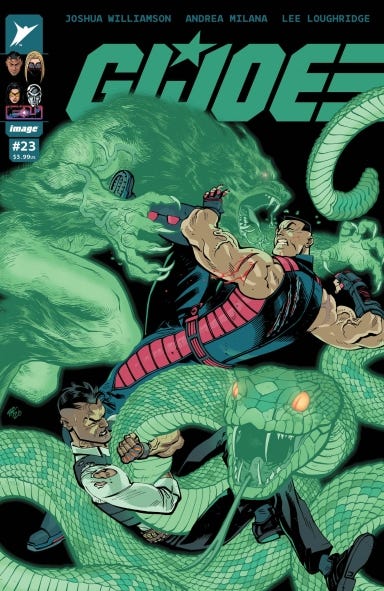
G.I. JOE #23
Writer: Joshua Williamson
Artist: Andrea Milana, Lee Loughridge
Publisher: Skybound Entertainment
Cover Price: $3.99
Secret origins revealed? The meeting between Destro and the Baroness? I don’t think there will be any practicing on the clarinet (deep cut, I know), but this series continues to impress almost two years later.

IF DESTRUCTION BE OUR LOT #2
Writer: Matthew Rosenberg, Elijah Rosenberg
Artist: Andy MacDonald, Francesco Segala
Publisher: Image Comics
Cover Price: $3.99
This dystopian AI tale of animatronic Abe Lincoln kind of came out of nowhere, and had everyone talking about what it means to be human in a world without humans… or not? Depends on if you believe good ol’ honest Abe or not. The robots certainly don’t, so this issue should tell us if this is a genuine hit, or a title that started hot out of the gate and then stumbled.
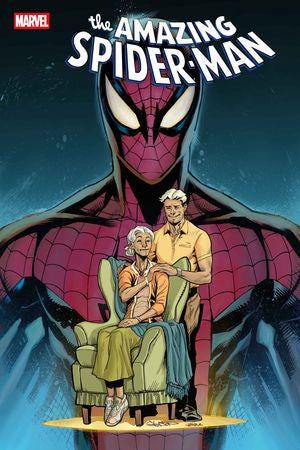
AMAZING SPIDER-MAN #31
Writer: Joe Kelly
Artist: Patrick Gleason
Publisher: Marvel Comics
Cover Price: $4.99
The solicitation claims Peter Parker’s world will never be the same!
Again?
I like Spider-Man enough to give the hype the benefit of the doubt and see what “The Talk” is all about.
MAD BY THE NUMBERS
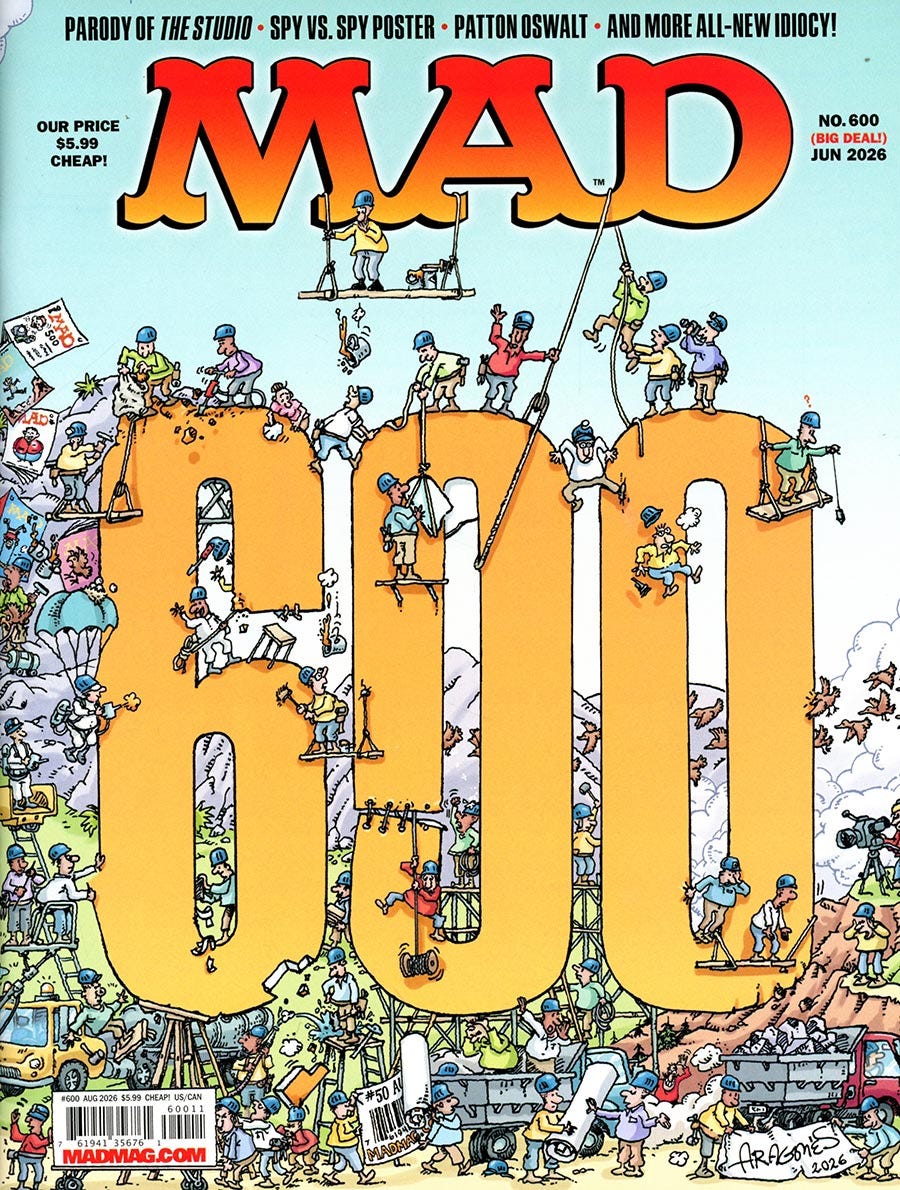
MAD has spent more than seven decades making fun of everything, including the kinds of franchises that normally get “by the numbers” treatment. This week, the joke is on time itself: MAD Magazine #600 hits shops on June 17, returning the magazine to legacy numbering and reminding everyone that Alfred E. Neuman may be the cockroach of American pop culture.
600 — the landmark issue number for MAD Magazine #600, on sale June 17, 2026.
74 years — how long MAD has been in the satire business, with DC describing the magazine as operating “since 1952.”
$5.99 — the cover price, which is also a pretty good punchline in a comics market where six bucks now buys you both a comic and mild economic anxiety.
26,950 days — the gap between the release of MAD Magazine #1 on September 3, 1952, and MAD Magazine #600 on June 17, 2026.
23 issues — how long MAD lasted as a comic book before switching to magazine format with issue #24 in 1955, a move that also helped it avoid the Comics Code era that crushed much of EC’s original comics line.
550 — the last issue number of the original long-running New York-era magazine before the 2018 relaunch reset MAD back to #1.
50 — the number of issues in the post-2018 numbering before DC folded that run back into the legacy count as #600. In other words, this issue is both a finish line and a correction.
2.8 million — copies sold by the September 1973 issue, reportedly MAD’s best-selling single issue ever. That one spoofed The Poseidon Adventure with “The Poopsidedown Adventure.”
2,132,655 — MAD’s average circulation peak in 1974, during Al Feldstein’s run as editor.
400 million+ — estimated copies sold by the main MAD title since 1960, according to Comichron’s sales-history work. Including reprints, the overall total is likely past half a billion.
18,749 — reported average paid circulation in 2024, based on Mike Slaubaugh’s compilation of MAD postal circulation data. That means the magazine’s print circulation is down roughly 99% from its 1974 peak — and yet it is still here.
44 years — roughly the length of MAD’s most famous ad-free stretch, from the late 1950s until the magazine began accepting outside advertising in 2001. For decades, its refusal to take regular ads was part of the joke and part of the trust.
$25 million — the amount sought in a 1961 lawsuit from music publishers over MAD’s song parodies. The case eventually helped reinforce parody and satire as protected speech.
2 Supreme Court-adjacent headaches — one over Alfred E. Neuman’s face, and one over song parody. For a magazine built on acting stupid, MAD helped create some surprisingly serious legal history.
93 — paperback MAD collections published through 1993, starting with The MAD Reader in 1954.
871 performances — the run of The MAD Show, the Off-Broadway musical that premiered in January 1966.
1961 — the debut year of “Spy vs. Spy,” Antonio Prohías’ Cold War slapstick masterpiece. The strip first appeared in MAD #60 and is still one of the magazine’s signature ideas.
1964 — the year Al Jaffee created the first MAD Fold-In, originally intended as a one-off gag. It became one of the magazine’s defining features.
73 years, 3 months — Al Jaffee’s Guinness-recognized record for the longest career as a comics artist, from his first publication in 1942 through the April 2016 issue of MAD.
And if that somehow does not feel ridiculous enough:
MAD went from a 10-cent EC comic, to a multi-million-copy newsstand monster, to a legal defender of parody, to a TV brand, to a museum subject, to a mostly reprint comic-shop survivor, and now back to legacy numbering with issue #600.
At some point, being obsolete for this long starts looking like immortality.
Cheers.
Stephen Schleicher