
The Dogpile
Temptation to join the pack doesn’t help any industry—by Stephen Schleicher
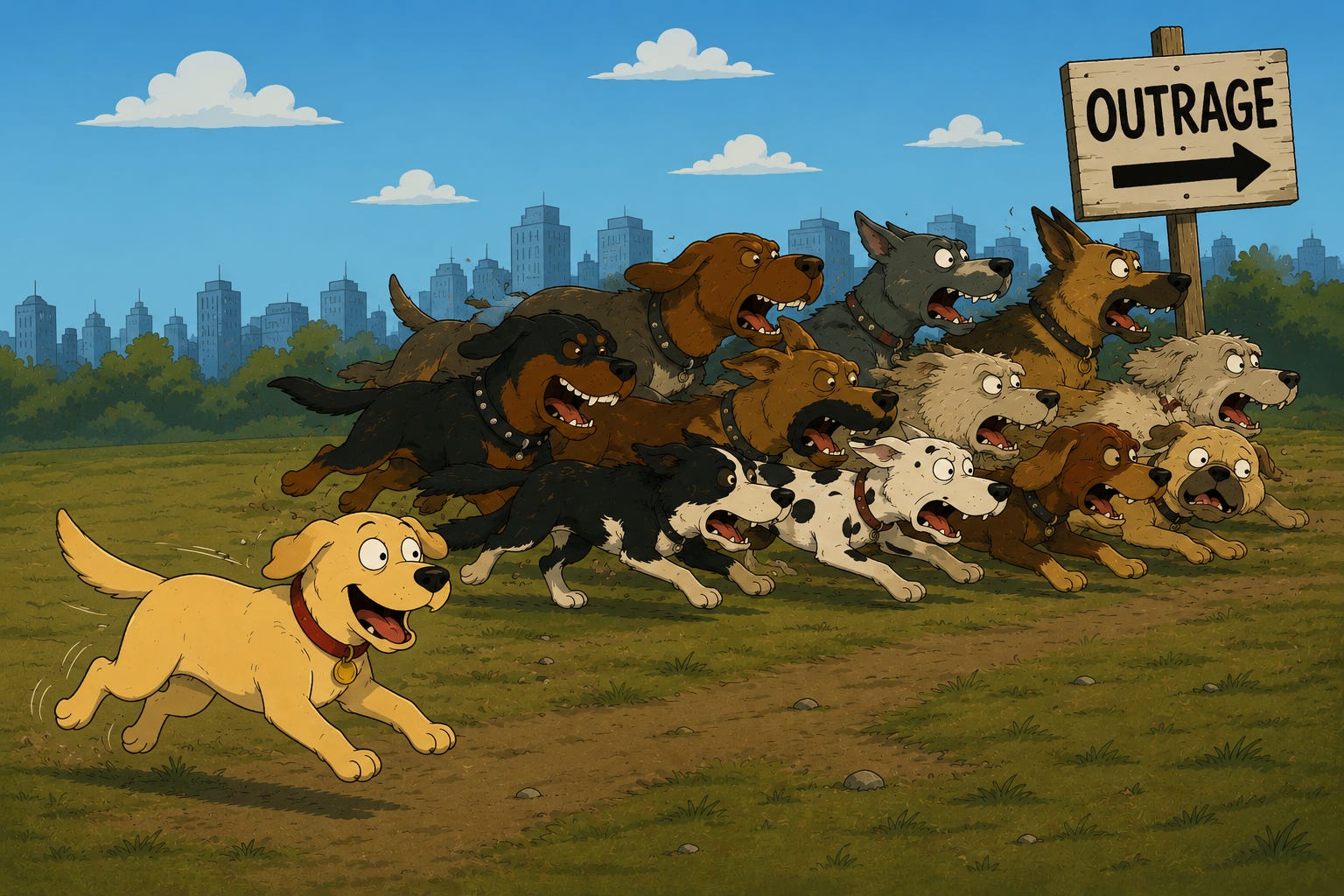
Every week, the internet picks someone or something to hate.
Sometimes it deserves it.
Sometimes it doesn’t.
The harder question is this:
How many of us actually stop long enough to figure out which is which?
There are a couple of instances where we see a dogpile actually having a positive outcome.
Sonic the Hedgehog is a great example. The initial design didn’t reflect the classic character design, and the company went back and changed it. The franchise has released three movies to date, with two more planned through 2028.
Shows like Brooklyn Nine-Nine and Lucifer have both had new seasons thanks to online campaigns where everyone got on board.
Sometimes the crowd is right.
That’s what makes the wrong crowds so dangerous.
Don’t get me wrong—if a company has done something wrong (your opinion or fact), it is okay to call them out.
A publisher who doesn’t pay their artists…
Call it out.
A fast food chain that changed its offerings to something subpar…
Call it out.
Someone abuses their position…
Absolutely call it out.
The question isn’t whether criticism is justified.
The question is whether you’ve made the criticism your own—or simply rented someone else’s outrage.
We need a moment to take a deep breath, examine the information, and decide whether jumping on the dogpile is actually helping (getting a publisher to pay their staff) or just dunking to be part of the pack.
Constant dogpiling because it is “fun” and everyone else is doing it does more harm to a fandom and industry than one might think.
When you see this happening on your social media, ask yourself:
Who organized it?
Is it legitimate?
Are bots involved?
Do I actually believe this… or am I borrowing someone else’s certainty?
And most importantly— Would I still believe this if nobody else was talking about it?
Algorithms, coordinated campaigns, influencers, recommendation engines—even bots—reward momentum.
Once enough people appear to believe something, the temptation is to assume they must be right.
That’s how dogpiles form.
Not because everyone examined the evidence.
Because everyone saw everyone else running in the same direction.
Every fandom eventually becomes the culture it rewards.
If outrage becomes the easiest path to belonging…
outrage eventually becomes the product.
And once outrage becomes the product…
Nobody remembers what they supposedly loved in the first place.
And that’s a terrible foundation for building a community around something you claim to love.
Cheers,
Stephen Schleicher